
Discover how automatic routing transforms conversion and efficiency in B2C sales teams. Models, benefits, risks, and practical steps to implement it.
How can automatic lead routing transform conversion and operational efficiency in B2C sales teams?
Automatic routing makes it possible to assign prospects immediately and fairly, reducing response time and significantly increasing conversion rates. By adopting this structured methodology, your team will be able to capture key opportunities that would otherwise be lost due to delays in assignment. This operational shift makes the difference between a reactive team and a truly agile one.
B2C sales teams face a critical challenge: converting leads into customers quickly and consistently. Automatic lead routing is essential to achieve this efficiency, distributing opportunities fairly and quickly, optimizing conversion, and avoiding costly losses due to delays. In this guide, we will explore what automatic routing is, what benefits it generates, what risks it involves, and how to implement it practically in your organization.
What is automatic lead routing and how does it work?
Definition and main models
Automatic routing is a system that assigns prospects (leads) to sales representatives according to predefined rules and strategic criteria. This process eliminates manual assignment, reducing errors and ensuring operational consistency.
There are three main models:
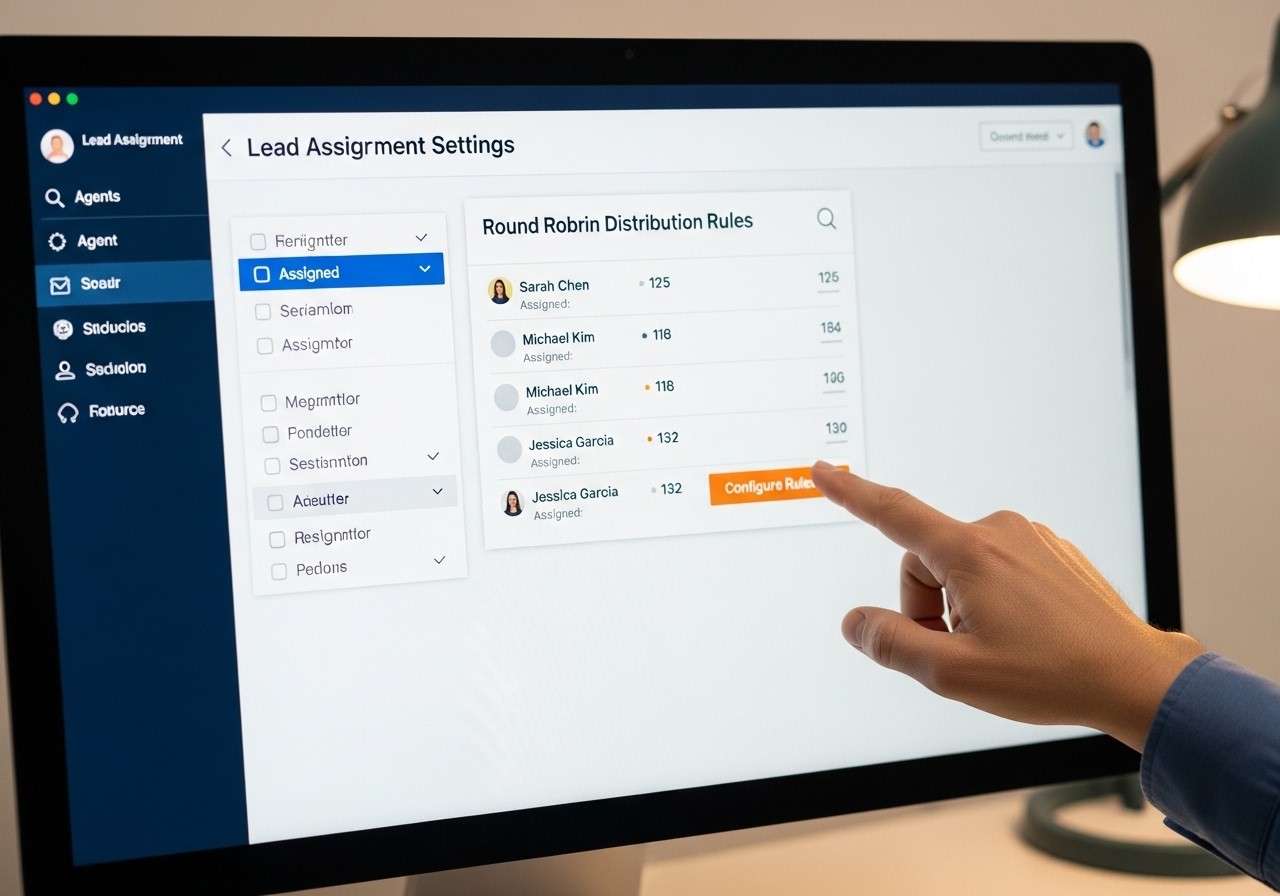
Round-robin: Distributes each new lead to the next available agent, ensuring absolute fairness and speed. Ideal when all team members have similar experience.
Weighted routing: Assigns a higher volume of leads to agents with better performance or capacity, optimizing resources based on historical results. Useful when there are notable differences in productivity.
Skills-based routing: Assigns leads according to the agent’s specialization or experience, ensuring a better match between prospect and representative. Recommended for products or services that require specific knowledge.
When should each model be used?
Round-robin: Teams with homogeneous experience and a need for maximum speed.
Weighted: Teams with notable performance differences or uneven workloads.
Skills-based: Complex product segments or niches that require specialization.
Routing model comparison table
Criterion | Round-robin | Weighted | Skills-based |
|---|---|---|---|
When to use it? | Homogeneous teams | Performance differences | Niche segments or products |
Advantages | Fairness, simplicity, speed | Optimizes resources, flexible | Better customer experience |
Limitations | Does not consider specific skills | Requires ongoing evaluation | More complex setup |
Scalability | High | Medium-High | Medium |
What benefits does automatic routing provide?
Fair distribution and team well-being
When all agents receive opportunities fairly, the perception of favoritism or uneven overload is eliminated. This significantly improves morale, engagement, and team retention.
Measurable impact on response time and conversion
Data shows that reducing first-contact time to less than 5 minutes can increase the probability of successful contact by up to 100 times. At the same time, conversion increases notably by eliminating delays and ensuring immediate follow-up.
Response speed is especially critical in B2C, where prospects often explore multiple options simultaneously. Every minute of delay represents a lost opportunity to the competition.
Improved customer satisfaction
Customers value fast attention and consistency in communication. Automatic routing ensures that each lead receives timely contact, creating a positive experience from the very first moment.
How is automatic routing implemented in a CRM?
Technical integration steps
Integration with existing infrastructure: Connect the routing system with your CRM and all lead capture channels (web forms, WhatsApp, phone, live chat).
Assignment rule configuration: Select and implement the chosen routing model (round-robin, weighted, or skills-based) according to your team structure.
Scoring and segmentation criteria definition: Establish how leads are prioritized and classified before assignment, considering potential value, source, profile, and other factors.
Real-time notification activation: Set up immediate alerts for assigned agents and automatic reminders if there is no response within a predefined timeframe.
Pilot testing and adjustments: Run tests with a small group of agents, measure results, and refine rules before full launch.
Team training: Train agents on system usage, response protocols, and expected operating standards.
Establishing tracking metrics: Define key indicators (response time, conversion rate, unassigned leads) and create dashboards.
Periodic review and optimization: Analyze data regularly, identify patterns, and adjust rules based on performance changes.
Automatic routing launch checklist
[ ] Complete technical integration with CRM and lead capture channels
[ ] Selection and configuration of the chosen routing model
[ ] Definition of scoring rules and segmentation criteria
[ ] Activation of notifications and automatic alerts
[ ] Comprehensive sales team training
[ ] Execution of pilot tests and analysis of results
[ ] Continuous monitoring of key metrics
[ ] Periodic review of rules and optimization
Rules, notifications, and operating logic
The system should send instant alerts to the assigned agent and automatic reminders if there is no response within a defined period (example: 5 minutes). The rules should allow flexibility for shift changes, vacations, or exceptional workloads.
It is advisable to automate reassignment if an agent does not respond within the target time, ensuring that no lead is lost due to inactivity.
What risks and objections should be considered?
Risk of insufficient personalization
Problem: If segmentation is not done properly, the system can generate generic assignments that result in impersonal sales.
Solution: Apply sophisticated lead scoring and segmentation rules before assignment, ensuring that each agent receives leads aligned with their profile and capabilities.
Managerial control and operational visibility
Problem: Managers may perceive a loss of control over the distribution and assignment of opportunities.
Solution: Implement systems that allow custom rules, full assignment auditing, and complete visibility of tracking in real time.
Recommended metrics for oversight:
- Average time to first contact
- Effective contact rate by agent
- Conversion and average value per representative
- Percentage of unassigned or uncontacted leads
- Average sales cycle time
How do you prioritize execution over traditional management?
Operational standards and sales discipline
Disciplined execution far outperforms traditional management. Agents should focus on contacting and advancing each lead according to clear protocols, eliminating subjective decisions about whom to contact.
Using operational checklists and automated tasks ensures consistency and reduces variability among representatives.
Scaling without compromising consistency
Standardizing the process makes it possible to scale teams without sacrificing quality or operational control. Automation reduces dependence on direct supervision, minimizes human error, and improves the replicability of success.
Practical target metric recommendations
Average time to first contact: Less than 5 minutes from lead capture.
Minimum expected conversion rate: Define according to sector and channel (example: >15% in B2C phone sales).
Percentage of unassigned leads: Target below 2%.
Average response time to inquiries: Less than 10 minutes.
"In B2C sales, response speed is the most determining factor for conversion and customer experience."
"Automatic routing not only distributes leads, but also reinforces operational discipline and team consistency."
"Every lead not contacted on time represents a lost opportunity and a real cost for the company."
Optimize your sales team’s execution and conversion
Automatic lead routing is the foundational basis for building agile, efficient, and consistent B2C sales teams. By implementing this structured methodology, you reduce delays, improve the customer experience, and significantly increase your conversion rate.
If you are looking for measurable results, rigorous operational control, and scalability without sacrificing quality, it is time to transform your lead assignment strategy. Request a strategic meeting with Vixiees and discover how to optimize the conversion of your prospects with an automatic routing system designed for your business.
Expert opinion:
Automated lead routing is more than a simple automation tool: it is the fundamental pillar for scaling sales in high-volume B2C markets. Speed and fairness in assignment eliminate operational bottlenecks and reinforce the team's sales discipline. However, the real key lies in adapting the model to the team's actual capabilities and in constantly measuring its impact on conversion and customer satisfaction. Rigorous execution, supported by robust technology and clearly defined rules, is what sets a genuinely efficient process apart from simple task management.