Discover how to implement sales automation to re-engage contacts, improve conversions, and standardize commercial execution in B2C teams with practical strategies.
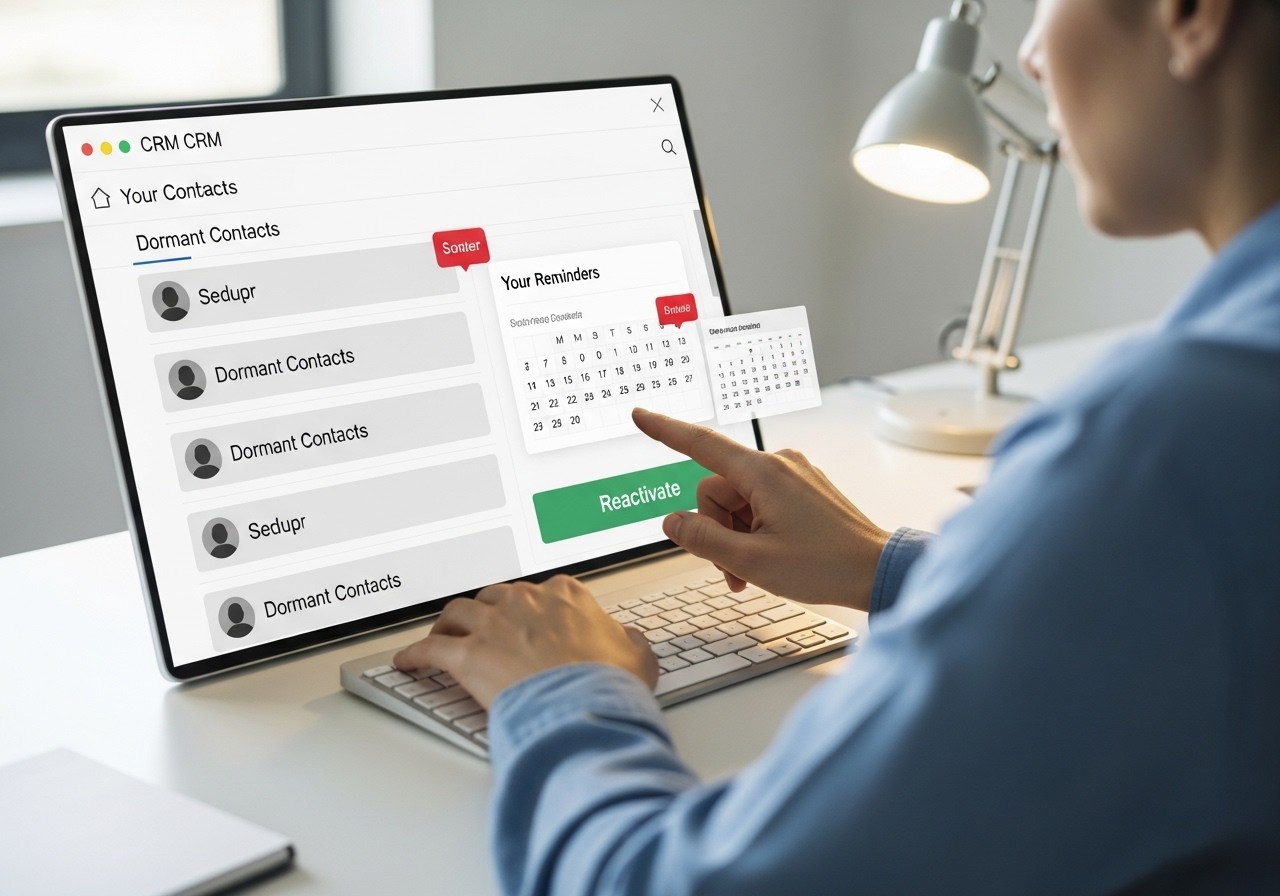
How can sales automation transform the reactivation of prospects in B2C teams and ensure consistent execution of the sales process? Sales automation makes it possible to recover lost opportunities, systematize follow-ups, and ensure that no prospect goes unattended. By implementing a structured lead recycling system, B2C companies can maximize conversions and optimize the performance of the sales team, turning cold contacts into real business opportunities.
Sales automation has become the engine that allows B2C teams to maintain efficiency and increase conversions in markets where competition is fierce. More and more companies recognize that the strategic recycling of prospects can recover between 10% and 25% of lost opportunities. In this complete guide, we show you how to set up prospect recycling, overcome common adoption barriers, and execute a sales process that truly impacts your business results.
What is prospect recycling and why does it matter in B2C?
Definition and types of contacts to recycle
Prospect recycling consists of reworking those leads that did not move forward in the buying process. It is especially relevant in B2C sales, where speed of response and personalization make the difference between success and failure. Contacts to recycle are usually:
- Contacts who did not respond after the first contact.
- Interested people who were not ready to buy at the initial moment.
- Prospects who requested information but did not move forward with the purchase.
These contacts represent a valuable asset that, with the right strategy, can become real revenue.
Criteria for identifying cold contacts
To identify which contacts should be recycled, it is essential to analyze:
- Time since the last contact (more than 14 days without a response indicates cooling off).
- Level of interaction (email opens, clicks, website visits reveal intent).
- Interest in specific products (browsing history and resource downloads).
Automatic scoring helps prioritize the contacts most likely to be reactivated, allowing your team to focus efforts on higher-value opportunities.
Re-engagement strategies: actionable steps
Segment contacts according to digital behavior and specific product interest.
Prepare personalized messages that reflect the contact's history (example: "We noticed you are still interested in X; can we help answer your questions?").
Use multiple communication channels: email, WhatsApp, phone call, depending on the contact's preference.
Apply a strategic follow-up cadence: day 0 (initial re-engagement message), day 3 (friendly reminder), day 7 (offer of specific help), day 14 (last chance before deactivation).
Record every attempt in the CRM (customer relationship management system) to maintain centralized visibility.
Analyze the responses obtained and adjust the sequence according to real market feedback.
Quick action: Select 20 cold contacts from your database, segment them by behavior and product, and launch a re-engagement sequence in the next 7 days to validate the strategy.
How can you automate lead recycling and segment it correctly?
Key capabilities of automation tools
Effective sales automation platforms should offer a comprehensive set of features:
- Multichannel campaign orchestration that coordinates messages across different platforms.
- Automatic contact scoring based on behavior and interaction.
- Integration with CRM (customer relationship management) to centralize information.
- Automatic lead nurturing that keeps engagement constant.
Main capability | Expected result |
|---|---|
Campaign orchestration | Higher response rate and consistency |
Automatic scoring | Prioritization of valuable contacts by potential |
CRM integration | Centralized, efficient tracking without duplicates |
Automatic lead nurturing | Contacts better prepared for sales |
Segmentation by behavior and product
Effective segmentation is based on a deep analysis of:
- Digital behavior: visits to specific pages, clicks on links, resource downloads, time on site.
- Interest in specific products: adapting messages based on browsing history and previous inquiries.
- Buying context: stage of the customer lifecycle and maturity of the opportunity.
This makes it possible to personalize each communication authentically and significantly increase the reactivation rate, generating a measurable impact on conversions.
Results analysis: recommended KPIs
Assess the success of automation with these key performance indicators:
KPI | Target range | Interpretation |
|---|---|---|
Reactivation rate | 10–25% | Percentage of contacts who respond |
Post-recycling conversion rate | 5–15% | Reactivated contacts that close |
Average time to reconnect | <48 hours | System response speed |
Quick action: Review the KPIs from your latest recycling campaign and adjust the least effective segments within 48 hours, implementing changes based on real data.
What barriers prevent the adoption of sales automation?
Team resistance and how to manage it
Resistance usually arises from fear of replacement, loss of control, or changes in work dynamics. To overcome this barrier, communicate key internal messages to managers and salespeople:
- "Automation frees up time for higher-value tasks and closing business."
- "The system supports and strengthens the salesperson's work; it does not replace it."
- "Personalization is maintained and increased thanks to intelligent segmentation."
Actively involve the team in the initial setup and demonstrate early results through real use cases. Transparency and recognition of achievements speed up adoption.
Personalization problems
Avoid falling into the mistake of sending generic messages that reduce effectiveness. Use behavioral data to adapt each communication authentically. Example of a personalized message: "We know you showed interest in X 20 days ago; would you like to receive more personalized information about how we solve that challenge?"
Ongoing monitoring and adjustments
Market conditions change constantly, as does contact behavior. Review recycling campaign results weekly and adjust the message sequence and segments based on real feedback. This ensures the strategy remains effective over time.
Quick action: Organize a feedback session with the sales team to identify specific barriers and improvement opportunities this week, ensuring alignment.
How do you execute a contact recycling system that scales?
Daily execution checklist for salespeople
Review every morning the list of contacts automatically assigned by the system.
Disciplinely execute the defined follow-up sequence (do not decide whom to call based on intuition).
Record every interaction, result, and observation completely in the CRM.
Prioritize contacts with the highest automatic scoring according to conversion probability.
Report incidents, blockers, or insights to the manager for quick adjustments.
Industrialization and process control
It is not enough to implement tools: the key is a system that ensures all contacts receive consistent follow-up according to the established cadence. This makes it possible to scale sales teams without losing control over quality or execution consistency. A repeatable, industrialized process generates predictable results.
Common mistakes to avoid
Allowing salespeople to choose whom to contact (fix with automatic assignment based on scoring).
Not measuring the reactivation rate systematically (fix with weekly KPIs and visible dashboards).
Sending generic messages without personalization (fix by personalizing by segment and behavior).
Lack of integration between disparate tools (fix by centralizing all information in the CRM).
Not adjusting the sequence after poor results (fix by reviewing effectiveness every 15 days).
Quick action: Implement the daily execution checklist in your team and review the automatic contact assignment in your system this week to ensure consistency.
Systematic execution: the real differentiator in sales automation
Sales automation and prospect recycling only generate real impact when executed with discipline, consistency, and a focus on measurable results. If you want to transform the efficiency of your B2C team and ensure that every contact receives the appropriate follow-up at the right time, Vixiees is the solution that guarantees systematic and scalable sales execution. With Vixiees, your team will have integrated tools that automate lead recycling, personalize communication, and generate real-time insights for strategic adjustments. We invite you to a strategic meeting to analyze how to optimize your sales process and recover lost opportunities that are waiting to be reactivated.
Expert opinion: Sales automation is not just a trend, but a necessity for any B2C company looking to scale results and maintain competitiveness in saturated markets. A well-implemented system makes it possible to orchestrate the sales process comprehensively, prioritize daily execution, and prevent potential contacts from going cold over time. The key lies in combining intelligent segmentation, contact nurturing automation, and a disciplined approach to execution, where salespeople spend their time interacting and closing, not deciding whom to call. This frees teams from repetitive tasks, allows sales leaders to anticipate problems and adjust the strategy in real time, and generates a direct impact on final results.