Discover how to define the optimal contact frequency to maximize conversions. Practical segmentation strategies, key metrics, and disciplined execution for sales leaders.
How can a company define the optimal contact frequency to maximize conversion without overwhelming its prospects? Constant interaction with leads is essential to increase conversions, but it requires strategic balance. This balance is achieved through intelligent segmentation, rigorous measurement, and systematic execution. In this article, we will explore how to reach that ideal point.
Contact frequency plays a fundamental role in converting leads into sales. Defining the right communication rhythm requires strategic segmentation, genuine personalization, and constant measurement of each interaction. This content offers a practical, structured approach for sales leaders looking to execute effective cadences, minimize prospect drop-off, and maximize revenue impact. We will explore concrete strategies to achieve excellence in contact management.
Question Index
Why is Contact Frequency key to conversion?
How do you segment leads to define the right cadence?
What metrics should measure cadence effectiveness?
What challenges prevent effective execution and how can they be mitigated?
How can execution be scaled without losing control?
Why is contact frequency key to conversion?
What we mean by Contact Frequency
Contact Frequency is the optimal number and interval of interactions between your sales team and leads. It is not just about quantity, but about timing, relevance, and perceived value. A well-structured contact cadence significantly increases the likelihood of conversion and reduces prospect drop-off.
When a cadence becomes counterproductive
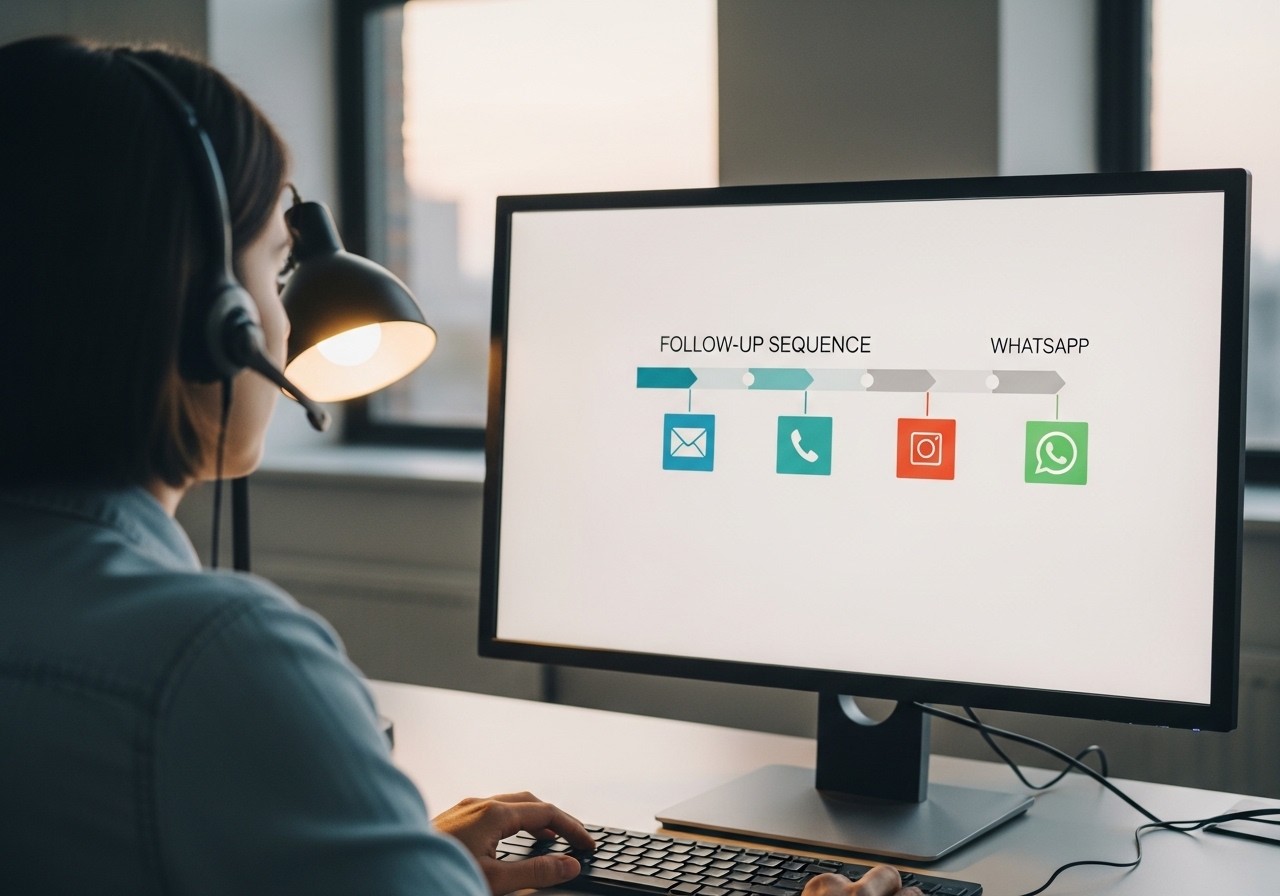
Too many contacts can feel intrusive and damage your company’s reputation. The solution lies in adapting the follow-up rhythm to the behavior and specific preferences of each lead, strategically combining calls, WhatsApp messages, and emails based on the responses received.
How do you segment leads to define the right cadence?
Essential criteria for prioritizing and segmenting leads
Segmenting leads according to their source, level of interest, and profile is fundamental. Marketing-qualified leads (MQLs) require a different cadence than cold leads. Other valuable criteria include purchase urgency, acquisition channel, and the prospect’s previous behavior.
Specific cadences by lead type
Below is an example of differentiated cadences based on segmentation:
Lead type | Contact sequence | Channels | Intervals | Target KPI |
|---|---|---|---|---|
MQL | 4 contacts/7 days | Call + WhatsApp | 1-2 days | Conversion >15% |
SQL (sales-qualified lead) | 6 contacts/10 days | Call + Email + WhatsApp | 1-2 days | Conversion >20% |
Cold lead | 3 contacts/10 days | Email + WhatsApp | 3 days | Response >10% |
Operational cadence template (example for MQL):
Step | Action | Time since previous | Target message | Tracking KPI |
|---|---|---|---|---|
1 | Call | 0 | Introduction and interest detection | % effective contact |
2 | 1 day | Personalized reminder | % response | |
3 | 2 days | Tailored offer | % open/click | |
4 | Call | 2 days | Closing or new proposal | % final conversion |
What metrics should measure cadence effectiveness?
Minimum essential KPIs to monitor
Measuring the real impact of the cadence requires clear, objective indicators:
Metric | Formula | Suggested target | Review frequency |
|---|---|---|---|
Contact rate | Leads contacted / total leads | >80% | Weekly |
Conversion rate | Converted leads / contacted leads | >15% (depending on sector) | Weekly |
Cost per contact | Total contact cost / number of contacts | <USD 5-10 | Monthly |
Response time | Average time to first contact | <15 min | Daily |
Drop-off rate | Leads with no response / total leads | <20% | Weekly |
How to calculate cost per contact
Add up all associated costs (human resources, technology, communications) and divide them by the number of effective contacts made. Example: If you invest USD 1,000 per month and make 200 effective contacts, your cost per contact is USD 5 (source).
What challenges prevent effective execution and how can they be mitigated?
Internal resistance to change and systematization
Cadence automation can generate resistance within the sales team. To overcome it:
- Involve salespeople in the cadence design from the start.
- Implement training in best practices backed by real data.
- Communicate that systematization frees up time for higher value-added activities.
Investment in tools and resources
Investing in technology (CRM, automation systems) and training is essential. The cost of not doing so is usually higher: leads not contacted and lost opportunities can represent thousands of euros per month (source).
Fear of overwhelming or annoying the customer
Genuine personalization and respect for the lead’s preferences are the best defense. If a prospect asks not to be contacted, respect that decision and adjust the cadence immediately.
How can execution be scaled without losing control?
Operating systems versus isolated tools
Having advanced tools is not enough. It is essential to define a clear operating system: who does what, when, and how. The CRM must reflect the defined process, not just store disorganized data.
Roles, responsibilities, and clarity in execution
The salesperson executes the predefined process; they do not unilaterally decide the next action. The sales leader continuously reviews metrics and adjusts the cadence based on real results. This avoids improvisation and maintains discipline.
Operational checklist for sales leaders:
1. Segment and prioritize leads based on commercial potential.
2. Define specific cadences and channels for each segment.
3. Assign concrete tasks and owners to each salesperson.
4. Monitor key KPIs on a weekly basis.
5. Adjust the cadence according to real data and trends.
Operational steps to implement an effective cadence:
1. Prioritize leads and assign specific owners.
2. Define contact sequences and channels by segment.
3. Execute the cadence without deviations or improvisation.
4. Measure results with clearly defined KPIs.
5. Periodically adjust the contact rhythm based on data.
Key conclusions
The optimal contact frequency depends on strategic segmentation and genuine personalization.
Continuously measuring and adjusting the cadence is essential to maximize conversion.
Disciplined, systematic execution outperforms improvisation and significantly reduces drop-off.
A clear system with defined roles makes it possible to scale sales while maintaining operational control.
Optimizing contact frequency requires a clear execution system, objective metrics, and rigorous discipline in lead management. Vixiees is not a conventional CRM: it is the platform that ensures your salespeople execute the right cadence at the precise moment, maximizing conversion and minimizing drop-off. We invite you to schedule a strategic meeting to discover how we can help you completely transform the management and conversion of your leads.
Expert opinion: Contact frequency is much more than a metric: it is the cornerstone of sales execution in high-volume operations. Ignoring it means losing revenue and reputation; overusing it erodes customer trust. The real challenge lies in industrializing the process without sacrificing flexibility or personalization. An effective sales leader must prioritize systematic, data-driven execution, continuously measure results, and adjust cadences based on real information, not assumptions. The key is to design a system where each contact delivers tangible value and where teams execute without ambiguity.