
Optimize lead qualification in B2C: implement scoring systems, automate follow-ups, and shorten sales cycles to increase conversion and profitability.
How can a structured lead qualification strategy transform the business results of a B2C sales team?
In B2C sales, lead qualification is much more than an administrative process: it is the engine that drives real conversion. A well-executed strategy makes it possible to identify and prioritize potential customers with a higher likelihood of closing, significantly shorten the sales cycle, and maximize the return on investment for each prospect. Discover how to implement scoring systems, automate validations, and establish follow-up protocols that transform your sales funnel.
In B2C sales (business to consumer), lead qualification has become the starting point for improving sales efficiency. Identifying and prioritizing potential customers using objective criteria avoids wasting resources on prospects with no viability.
In this content, we explore why opportunities are lost in the current process, how to clean up and optimize your CRM (customer relationship management system), and how response speed and disciplined execution directly impact conversion and revenue. We will analyze practical strategies and systems your sales team can implement today to achieve measurable and sustainable results.
Why do you lose opportunities in the lead qualification process?
Lack of precise and objective qualification criteria
Capturing many prospects is not enough if they are not evaluated with clear and measurable criteria. Without a rigorous definition of the ideal customer profile (ICP) and a deep analysis of behavior—interactions, intent signals, purchase timing—the sales team wastes resources on low-viability contacts. Superficial evaluation causes the conversion rate to drop and profitability to diminish.
Prospects lost due to poor follow-up
Most sales require between five and twelve contact attempts, but nearly half of salespeople give up after the first attempt. This lack of systematic persistence causes up to 50% of opportunities to be lost before maturing. The solution lies in establishing a disciplined, multichannel follow-up cadence that ensures constant visibility.
Example of a recommended follow-up cadence:
First contact: within the first 5 minutes (call or WhatsApp).
Second attempt: after 24 hours (email or direct message).
Third attempt: after 3 days (follow-up call).
Fourth attempt: after one week (personalized value message).
Final attempt: after 14 days (final offer or conclusion of the cycle).
Misalignment between sales and marketing teams
When sales and marketing do not share a consistent definition of what a qualified lead is (MQL or SQL), friction, duplicated effort, and lost efficiency arise. Constant collaboration, joint review of criteria, and alignment on metrics are essential to optimize conversion and eliminate misunderstandings.
How do you clean, optimize, and prioritize your CRM?
Implement a prospect scoring system
Assigning an objective, data-based score to each prospect makes it possible to segment actions and prioritize the team’s time. The following model summarizes a basic scoring structure:
Score | Description | Recommended action | Responsible |
|---|---|---|---|
0–30 | Non-viable prospect | Delete or archive | Sales manager |
31–60 | Nurturing prospect | Automate follow-up | Marketing |
61–100 | Priority prospect | Assign to active sales | Sales team |
Scoring should be based on demographic data, digital behavior, prior interactions, and explicit signals of purchase intent.
Automate real-time validation and filtering
Automation tools and modern CRM platforms make it possible to validate prospect data instantly, filter out those who do not meet minimum requirements, and automatically assign real opportunities to the sales team. This reduces human error, speeds up processes, and improves accuracy.
Establish periodic cleanup protocols
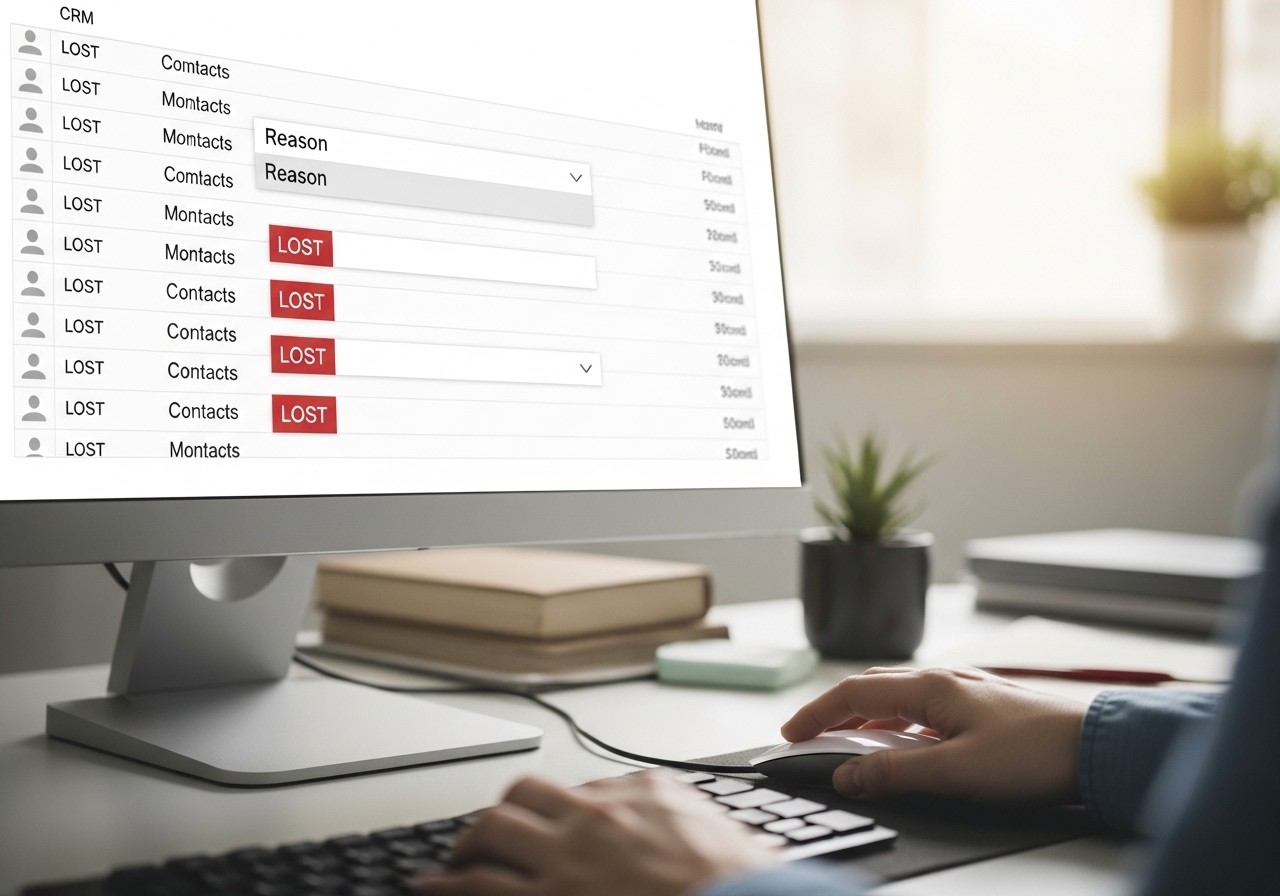
Implement a monthly routine for reviewing and cleaning the CRM. Remove inactive prospects, update scores based on behavior, reassign contacts according to their progress, and archive closed opportunities. This discipline prevents the buildup of outdated data and keeps the focus on real, viable opportunities.
How does response speed influence conversion?
Immediacy as a critical factor: metrics and goals
Responding to a potential customer within the first 5 minutes multiplies the likelihood of conversion by ten. Speed communicates interest, professionalism, and availability. Define clear and measurable goals: less than 5 minutes for the first contact and less than 24 hours for the second follow-up attempt.
Reducing the sales cycle through optimized execution
A shorter sales cycle means less resource investment per opportunity and faster revenue generation. Strategic prioritization and disciplined follow-up make it possible to significantly reduce the average cycle, increase prospect turnover, and improve profitability per salesperson.
Tracking key metrics and continuous adjustment
Monitor critical indicators such as conversion rate, average closing time, the percentage of prioritized prospects that move forward in the funnel, and customer acquisition cost. Review this data monthly, identify patterns, and adjust processes, criteria, and assignments based on the results observed.
How do you turn management into real execution?
Design operating systems that drive action
The CRM should be an operational tool that guides action, not just a data repository. Implement systems that show the salesperson the following recommended actions, eliminate ambiguity in decision-making, and reinforce discipline at every step of the process.
Industrialize processes to scale without losing quality
Standardize evaluation and follow-up so that each team member follows the same protocol. This makes it possible to scale the team without sacrificing quality: all prospects receive consistent treatment, and best practices are replicated systematically across the organization.
Scale teams while maintaining control and consistency
As the sales team grows, the risk of losing control over quality and execution increases exponentially. A system that reinforces action, facilitates periodic review, and standardizes processes makes it possible to scale without sacrificing results or misaligning business objectives.
From operational management to real conversion: clean, prioritize, and execute
Optimizing lead qualification is key to transforming your sales process and scaling results. Clean inactive prospects from your CRM, automate validation with objective criteria, and establish clear and disciplined follow-up protocols to improve efficiency, conversion, and revenue.
Remember: the difference is made by consistent execution, systems that facilitate action, and continuous review of key metrics. If you are looking for a platform that strengthens sales action and does not just store data, at Vixiees we help you take your B2C sales team to the next level. Request a strategic meeting today and discover how we can transform your sales funnel into a real and measurable growth engine.
Expert opinion:
B2C lead qualification is the decisive factor that separates teams that grow from those that simply manage activity. In high-volume markets, the ability to prioritize prospects with objective data and operational systems is what really matters. Experience shows that implementing a clear scoring system, automating real-time validation, and establishing disciplined follow-up cadences not only improves conversion rates, but also reduces operating costs and speeds up closing. Consistent execution, supported by technology and repeatable processes, is the competitive differentiator that turns opportunities into real, sustainable revenue.