Detailed analysis of Pipedrive pricing and its impact on sales execution. Discover how to evaluate hidden costs, optimize high-volume teams, and maximize your return on investment.
How do Pipedrive prices and its cost structure impact the real performance of high-volume sales teams? The pricing structure of a CRM solution can determine whether a sales team succeeds or stagnates. Analyzing its impact goes beyond the monthly fee: it involves measuring return on investment, identifying hidden costs, and evaluating the system’s ability to turn prospects into real revenue.
In today’s B2C sales context, understanding Pipedrive pricing and its impact on sales execution is essential for teams managing large volumes of prospects. This analysis examines how cost structure, subscription models, and automation directly influence conversion, return on investment, and operational efficiency in markets such as Spain and Latin America.
What are Pipedrive’s prices and what real value do they provide?
Initial investment per user: plan structure
Most CRM platforms offer tiered plans designed for businesses of different sizes. The basic cost usually starts at $15 USD per user/month, while advanced plans can reach $60 USD per user/month or more. For a team of 10 salespeople, the monthly investment ranges from $150 to $600 USD, depending on the plan and the selected features (approximate figures as of June 2024, using the current exchange rate).
Hidden costs you should consider
Unproductive administrative time: If each salesperson spends 2 hours a day on manual tasks, the wasted salary cost can exceed $1,000 USD per team per month.
Uncontacted prospects: Ignoring 50% of prospects can mean losses of $10,000 USD per month in potential revenue (estimate based on an average deal size of $2,000 USD and a 10% closing rate).
Training and adoption investment: The learning curve and initial training require additional time and resources that many companies do not budget for.
Fee comparison: evaluation of available options
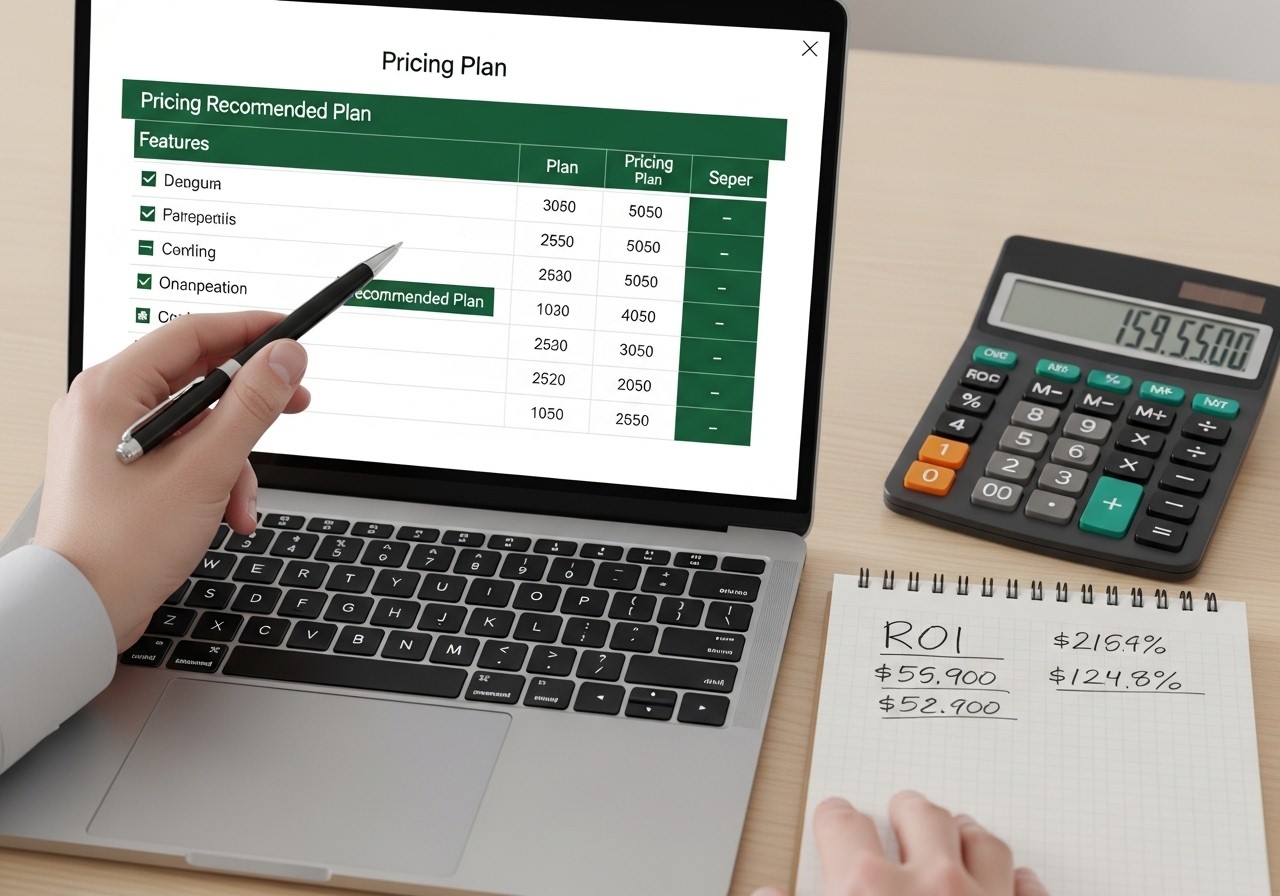
Plan | Price per user/month | Recommended team | 3 key features | Expected ROI indicator |
|---|---|---|---|---|
Basic | $15 USD | 1-5 | Contact management, visual pipeline, basic tasks | Moderate ROI (limited automation) |
Intermediate | $30 USD | 5-20 | Automation, reports, integrations | High ROI (improved follow-up) |
Advanced | $60 USD | 20+ | Automated sequences, scoring, advanced reporting | Very high ROI (full optimization) |
The key is to evaluate not only the monthly price, but also the real impact on conversion and the reduction of unproductive tasks that create lost opportunities.
How to implement a CRM solution in high-volume teams?
Centralize prospect sources: integration and data flow
Integrate web forms, ads, and channels such as WhatsApp into a single centralized system.
Automate prospect assignment to avoid information loss and ensure full coverage.
Automate first contact: templates and response times
Set up automatic responses for new prospects in real time.
Establish standardized templates for calls, emails, or personalized messages.
A prospect contacted in under 5 minutes significantly multiplies their chances of conversion (verified by ForrestContact, 2023).
Scoring system to prioritize leads
Assign scores based on interest, source channel, and probability of closing.
Allow salespeople to focus on prospects with the highest conversion potential.
Decision checklist for sales leaders:
- Does the team exceed 5 salespeople?
- Are more than 100 prospects managed per month?
- Is first-contact automation needed?
- Is advanced sales process customization required?
If most of the answers are yes, the investment in an advanced CRM system is fully justified.
What risks and common objections arise with a CRM platform?
Impact of per-user cost on growing teams
As team size increases, the monthly cost rises proportionally.
It is critical to calculate return on investment by considering the additional revenue generated through automation.
Learning curve and adoption of advanced features
Initial training can slow productivity during the first few weeks of implementation.
Without structured training, advanced features remain underused and potential value is lost.
Customization limits for complex workflows
Some CRM platforms do not allow every company-specific process to be fully adapted.
It is essential to evaluate flexibility and customization capabilities before signing a contract.
Why does sales execution matter more than simple management?
Implement processes that enforce key steps
A sales operating system should guide salespeople through every relevant interaction.
It prevents salespeople from making discretionary decisions about whom to contact and when, reducing variability and losses.
Measure interactions as repeatable and scalable processes
Every contact, follow-up, and close should be recorded and measurable.
This makes it possible to identify operational bottlenecks and continuously optimize the sales flow.
Scale teams while maintaining total operational control
Centralization and automation make real-time supervision easier.
Leaders can adjust processes and allocate resources based on objective metrics and results.
Key metrics to measure results after implementation:
- Conversion rate by lead.
- Average time to first contact.
- Revenue generated per salesperson.
- Number of prospects managed per week.
Periodic measurement of these KPIs makes it possible to justify the initial investment and detect specific areas for continuous improvement.
Take sales execution to the next level
Investing in a CRM platform goes far beyond the monthly cost: it is a strategic decision to maximize conversion and return on investment in sales. A sales operating system that imposes disciplined processes and automates repetitive tasks makes the decisive difference in competitive, high-volume markets. To explore how Vixiees can help you optimize your sales team’s execution and achieve tangible, measurable results, we invite you to schedule a professional Strategic Meeting with our specialists.
Expert Opinion: In high-volume B2C sales management, the cost of a CRM platform should not be evaluated solely by its monthly price, but by its tangible impact on execution and lead conversion. A sales operating system that enforces processes, automates first contact, and centralizes information can significantly multiply return on investment and reduce losses due to lack of follow-up. The true value of these tools is measured by concrete results and business metrics, not by features or marketing promises.