Structure, clean up, and supervise your sales pipeline with discipline: key stages, conversion metrics, automatic alerts, and systems that transform execution.
Why is it essential to structure and clean up your sales pipeline to maximize conversion in B2C?
A well-defined and refined sales funnel makes it possible to identify real opportunities, prioritize actions rigorously, and avoid losing potential customers. This improves conversion, reduces errors, and creates a more predictable and efficient sales process. It is estimated that teams with structured pipelines can increase their conversion rate by up to 40% and significantly reduce the sales cycle time.
Pipeline management (sales funnel) is essential for turning potential customers into actual sales. Without a clear structure and a refined process, teams lose opportunities, make decisions based on outdated data, and see leads stall in intermediate stages. In this content, we will explore how to organize, clean up, and monitor your daily sales flow, which metrics to review, how to identify cold leads, and, most importantly, how to move from simple management to disciplined execution to maximize results and scale your sales with confidence.
Why does structuring a pipeline improve conversion?
Definition of the sales pipeline
The pipeline (sales funnel) is the visual and operational representation of the customer journey from the first contact to closing. It allows you to know which stage each potential customer (lead) is in and which actions you need to take to move them toward the sale. A clear pipeline structure is what differentiates teams that scale from those that stagnate.
Differences in B2C vs B2B
In B2C (business-to-consumer), the sales cycle is usually shorter and more direct than in B2B. Speed and volume require an agile sales funnel, with automated tasks and clear rules to avoid accumulating potential customers without follow-up. This requires greater operational discipline and greater dependence on systems that ensure no lead is lost.
How do you clean and maintain the pipeline every day?
Key stages: generation, qualification, proposal, and closing
Each stage of the pipeline requires specific tasks, defined owners, and clear metrics. Below, we detail what should happen in each phase:
Lead generation
- Required tasks: Record data in the CRM (customer relationship management system) within 2 hours of receipt.
- KPI: % of leads recorded on time.
- Quick script: "Hi, how can I help you today?"; "How would you prefer we contact you?"; "Thank you for your interest, we will get back to you shortly."
Qualification
- Tasks: Call or WhatsApp message within 24 hours; validate interest and profile.
- KPI: % of qualified leads; average response time.
- Quick script: "What is your main need?"; "Do you have a defined budget?"; "When would you like to move forward?"
Proposal
- Tasks: Send a personalized proposal within 48 hours after qualification.
- KPI: % of proposals sent; proposal response rate.
- Quick script: "I am attaching the requested proposal."; "Do you have any questions about the offer?"; "When could we talk to answer your questions?"
Closing
- Tasks: Final follow-up (call or message) within 72 hours after the proposal; record the result in the CRM.
- KPI: % of closed deals; final conversion ratio.
- Quick script: "Would you like to move forward with the purchase?"; "Is there any barrier to closing today?"; "Thank you for your time, can I help you with anything else?"
Checklist of actions by stage
Generation: Record data (owner: SDR), initial contact (cadence: <2h).
Qualification: Call/message (owner: sales rep), validation (cadence: <24h).
Proposal: Send proposal (owner: sales rep), follow-up (cadence: <48h).
Closing: Final call (owner: sales rep), record in CRM (cadence: <72h).
Identifying cold leads and alert rules
A potential customer is considered cold if:
- They do not respond after 3 contact attempts in 7 days.
- There is no interaction in 14/30/90 days (depending on the sales cycle).
- They do not move to the next stage after 2 weeks.
Examples of automated alert rules you should implement:
- "Mark as inactive if there is no response within 14 days."
- "Send an automatic reminder after 3 failed attempts."
- "Archive according to the retention policy if there is no activity in 90 days."
Automatic cleanup tools
Functionality | When to use it? | Expected result |
|---|---|---|
Inactivity detection | Potential customers without response | Mark as inactive or archive |
Automatic alerts | Tracking pending tasks | Reminders for the sales rep |
Mass cleanup | Monthly funnel cleanup | Delete records according to retention rules |
Stage updates | Automatic changes by deadline | Automatic progress or alert to the manager |
WhatsApp integration | Direct communication and logging | Conversations centralized in CRM |
Activity reports | Weekly/monthly review | Clear metrics and quick action |
What should a manager monitor in the pipeline?
Real-time visibility and control
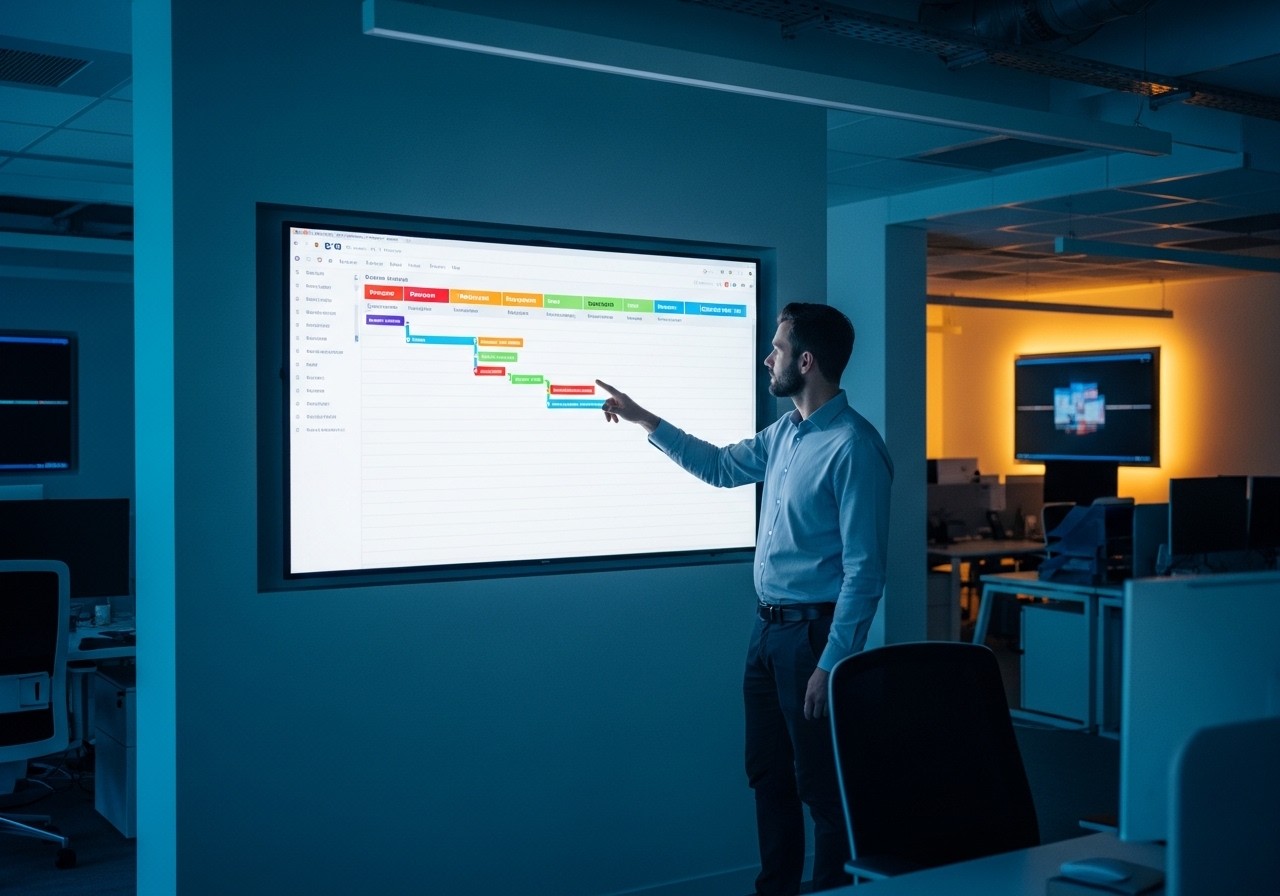
The manager must have real-time access to the sales funnel and be able to filter by stage, owner, and age of each potential customer. This makes it possible to anticipate bottlenecks, identify stagnation patterns, and reassign resources strategically.
Active supervision: roles and frequencies
Daily review: Sales rep activity, pending tasks, new leads.
Weekly review: Progress by stage, cold leads, reasons for stagnation.
Monthly review: Overall results, loss and drop-off analysis, process adjustment.
Basic metrics to measure
KPI | Formula | Review frequency |
|---|---|---|
Stage conversion rate | (Customers who move forward / Total in stage) x 100 | Weekly |
Average time in stage | Sum of days in stage / no. of customers | Weekly |
Average customer value | Total sales / no. of closed customers | Monthly |
Drop-off rate | (Customers who leave without purchase / Total) x 100 | Monthly |
No. of active customers | Total customers in motion | Daily |
Reference targets: stage conversion rate >20% in B2C, average time per stage <5 days.
How do you move from management to execution in sales?
Prioritize systems over tools
It is not enough to have standalone tools. An integrated system enforces rules, automates tasks, and centralizes information. This prevents dependence on memory or the sales rep's personal judgment. The system is what ensures that everyone executes the same process with the same rigor.
Industrializing the process
Systematizing the sales flow makes each action repeatable and scalable. Define templates, scripts, and fixed cadences for each stage. Example of an optimized cadence:
- Day 0: first contact
- Day 2: second attempt
- Day 7: value email
Sales reps' operational decisions
The sales rep should not decide whom to contact, but rather execute the tasks assigned by the system. This reduces the risk of losing valuable opportunities and ensures that no potential customer goes without follow-up. Operational discipline is what differentiates high-performing teams.
Discipline and the system: keys to scaling your sales
A well-structured and cleaned-up sales funnel is the foundation for maximizing conversion and reducing the loss of potential customers. But the real difference is made by disciplined execution, guided by systems that enforce tasks, generate automatic alerts, and ensure that no lead is lost in the process. When you combine clear structure, visible metrics, and intelligent automation, the result is predictable: higher conversion, shorter cycles, and teams that scale without depending on individual effort.
If you want to take your sales team's execution to the next level and transform your pipeline into a conversion machine, we invite you to schedule a Strategic Meeting with Vixiees to design the system your business needs.
Expert opinion:
Most B2C sales teams fail not because they lack leads (prospects), but because they do not execute each stage of the sales funnel with discipline. Daily cleanup and a clear process structure are the foundation for preventing opportunity leaks and making quick decisions based on real data. It is not enough to manage; you have to execute, measure, and adjust the sales cycle rigorously. The systems that enforce tasks, generate automatic alerts, and require salespeople to follow defined steps are the ones that really make the difference in conversion, operational efficiency, and long-term profitability.