
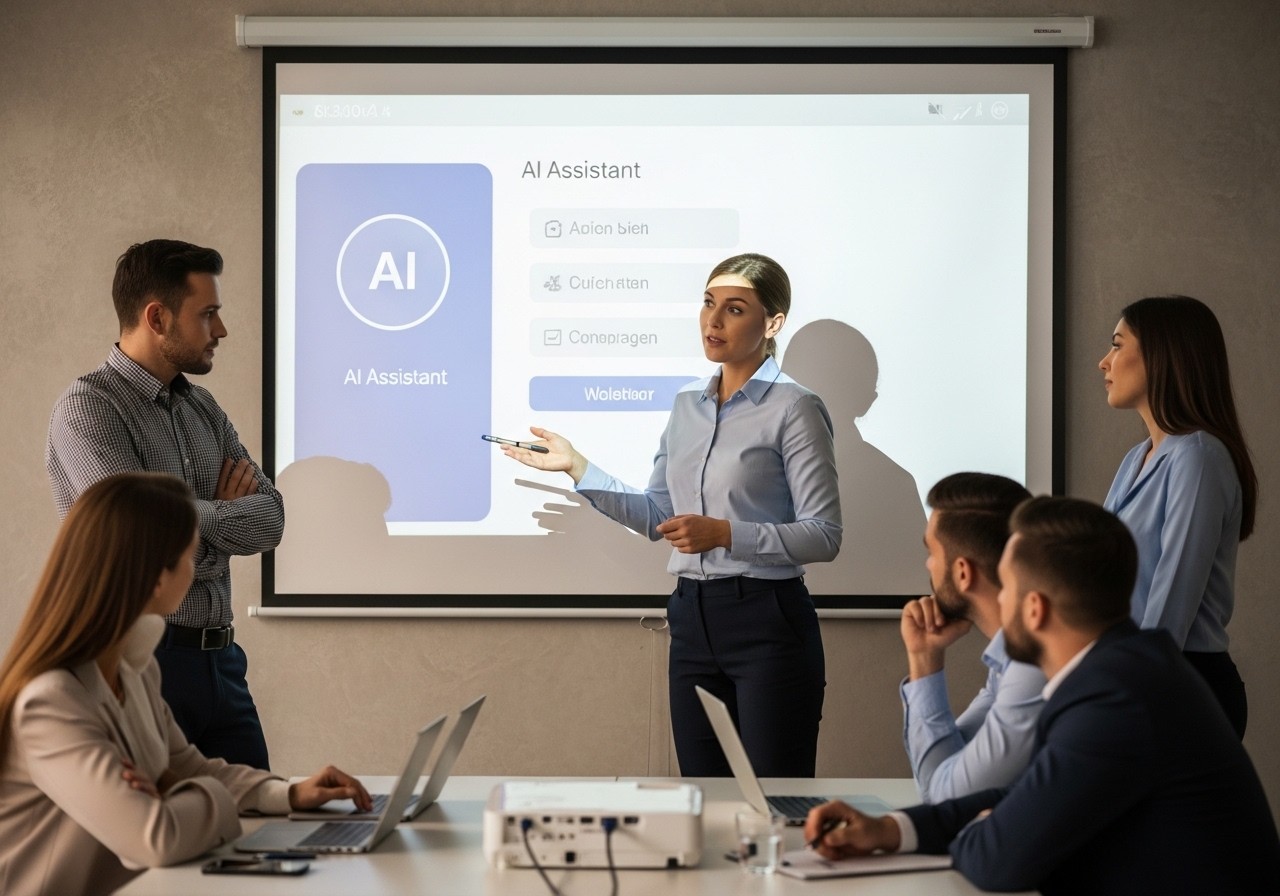
Discover how B2C sales teams can overcome resistance to AI agents, implement them strategically, and achieve tangible improvements in conversion and operational efficiency.
How can sales teams turn resistance to the AI agent into a sustainable competitive advantage? The answer lies in addressing grounded fears, demonstrating concrete and measurable results, and establishing clear collaborative processes that allow salespeople and virtual assistants to work together to boost conversion, improve operational efficiency, and ensure control over sales execution.
The integration of AI agents into B2C sales teams presents both challenges and significant opportunities. Although many salespeople fear losing autonomy or being replaced, virtual assistants can become strategic allies that enhance individual performance. This content explores the root causes of resistance, examines the practical and concrete advantages of AI in lead management, and provides a clear framework for implementing these systems effectively, maximizing conversion while maintaining operational control in sales.
Why does resistance emerge in sales teams?
Fears and limiting perceptions
The fear of being replaced by virtual assistants or intelligent bots is common among salespeople. Often, these professionals associate automation with a loss of personal value, autonomy, and direct control over their daily work.
Lack of understanding and technical knowledge
Many salespeople do not know how artificial intelligence agents actually work or which specific tasks they can perform. This knowledge gap fuels distrust and amplifies the perception of threat toward the technology.
Impact on organizational culture
The introduction of advanced technology can transform the organization’s cultural dynamics. If leadership does not communicate the strategic purpose, expected benefits, and real impact on roles and responsibilities in a clear, transparent, and consistent way, resistance tends to intensify. Fostering a culture of adaptability and continuous learning is essential to move forward successfully.
Common synonyms for AI agent: virtual assistant, conversational assistant, virtual agent, intelligent bot, intelligent agent.
How do AI agents transform lead conversion?
An intelligent conversational assistant can revolutionize lead management by automating repetitive tasks and ensuring systematic, consistent follow-up. Key benefits include:
Automatic lead qualification based on predefined and adjustable criteria
Instant responses to multichannel inquiries (WhatsApp, phone, email)
Scheduled and personalized follow-up based on lead behavior
Predictive data analysis to identify buying patterns and opportunities
Tasks that an AI agent efficiently automates
Classification and segmentation of opportunities
Sending reminders and contextual follow-up messages
Automatic scheduling of appointments and confirmations
Collection and organization of customer data
Comparison: Manual management versus AI agent
Aspect | Manual process | With AI agent |
|---|---|---|
Response time | Hours or days | Seconds |
Consistency | Varies by salesperson | High and uniform |
Follow-up | Frequently omitted | Always systematized |
Scalability | Limited by resources | No operational limits |
By automating these functions, AI enables teams to focus on higher-value strategic tasks, directly improving conversion rates and the overall customer experience.
How do you implement an AI agent in sales teams effectively?
Pilot projects and controlled testing
Starting with a pilot project in a specific area makes it possible to demonstrate tangible value and make adjustments before scaling across the entire organization. It is advisable to define clear, measurable goals and specific KPIs from the start of the project.
Continuous training and support
Training is essential for success. Salespeople must learn how to interact effectively with the virtual assistant, understand how to leverage its recommendations and analyses, and recognize how this collaboration improves their results.
Human-AI collaboration model
Strategic collaboration should be encouraged, not competition. The salesperson remains responsible for executing the process, while the intelligent agent automates operational tasks, provides guidance, and optimizes day-to-day operations.
Clear, transparent, and ongoing communication
Explicitly explaining the strategic purpose, the concrete benefits, and the expected impact of the implementation reduces uncertainty and significantly improves acceptance of change.
Recognition of early achievements
Recognizing and celebrating the team’s early successes motivates employees and reinforces confidence in the technology and in leadership.
Emphasis on concrete and measurable results
Showing objective data on improvements in conversion, operational efficiency, and customer satisfaction reinforces adoption and justifies the investment made.
What tactics reduce resistance and accelerate adoption?
Involve salespeople from the initial stages: actively listen to their concerns, suggestions, and feedback.
Offer robust technical support and continuous training adapted to different skill levels.
Establish open and accessible communication channels to resolve questions and concerns.
Measure results rigorously and share progress with the team periodically.
Explicitly ensure that AI complements and enhances, rather than replaces or diminishes, human work.
These actions build organizational trust and significantly accelerate the cultural transformation process.
How do you ensure predictable execution and controlled scaling?
The key transition is moving from simple management to strategic execution. A well-implemented AI system ensures that every lead is served and followed up according to the defined process, without depending on individual discretion or external variables.
Comprehensive standardization of sales processes: every step is clearly defined, documented, and automated according to quality standards.
Centralized real-time oversight: managers can monitor compliance, identify deviations, and make adjustments in real time.
Scalability without compromise: the system enables exponential growth without losing operational control or customer service quality.
AI turns execution into a predictable, measurable, and replicable process, enabling controlled and sustainable growth.
How do you measure the real impact of an AI agent?
Conversion rate
Compare the proportion of converted leads before and after implementing the virtual assistant, establishing a clear baseline.
Customer response time
Measure the reduction in average response time after automation, evaluating the impact on the customer experience.
Percentage of automated tasks
Calculate what proportion of repetitive tasks has been taken over by the AI agent, freeing up human capacity.
Additional relevant KPIs
Cost per opportunity generated
Customer satisfaction level and Net Promoter Score
Number of opportunities handled per salesperson
Lead abandonment rate
Average transaction value
Objective and continuous measurement makes it possible to adjust, optimize, and demonstrate the value of the adoption strategy.
What is the recommended roadmap for implementation?
Thorough diagnosis of current processes and identification of critical improvement points
Selection of the strategic pilot area and clear definition of measurable objectives
Configuration, integration, and customization of the AI agent according to specific processes
Initial team training with emphasis on use cases and best practices
Execution of the pilot under supervision and systematic data collection
Detailed analysis of results, learnings, and necessary adjustments
Progressive and controlled scaling to the rest of the sales team
This gradual and structured approach minimizes operational risks and maximizes positive impact across the organization.
Boosting B2C sales with AI agents: the urgent transformation strategy
Adopting AI agents in B2C sales has become a strategic necessity to optimize operational execution and sustainably increase lead conversion. Overcoming resistance to change requires decisive leadership, continuous training, and rigorous measurement of tangible results. Vixiees provides a comprehensive and scalable solution to standardize sales processes and maximize measurable results.
Expected results after implementation:
- Improve conversion rate by 10% to 20%
- Reduce average response time by up to 80%
- Automate more than 50% of repetitive and operational tasks
- Increase the number of opportunities handled per salesperson
- Improve consistency and quality in customer service
By the end of implementing these transformation strategies, your sales team will be optimized to execute predictable processes, scale without compromising quality, and position itself as a world-class operation. We recommend scheduling a strategic meeting to analyze how Vixiees can help you transform your sales team and achieve these controlled growth objectives.
Expert opinion: Resistance to change in B2C sales teams is understandable with the arrival of intelligent agents. However, the data show that organizations that integrate virtual assistants achieve significant gains in conversion and efficiency. The challenge is not purely technological, but one of change management: adoption must be gradual, supported by ongoing training and rigorous measurement of results. AI does not replace the salesperson; it enhances them and frees them from repetitive tasks. Leadership should focus on strategic execution, not mere management, to transform sales culture and ensure long-term success.